Home Care


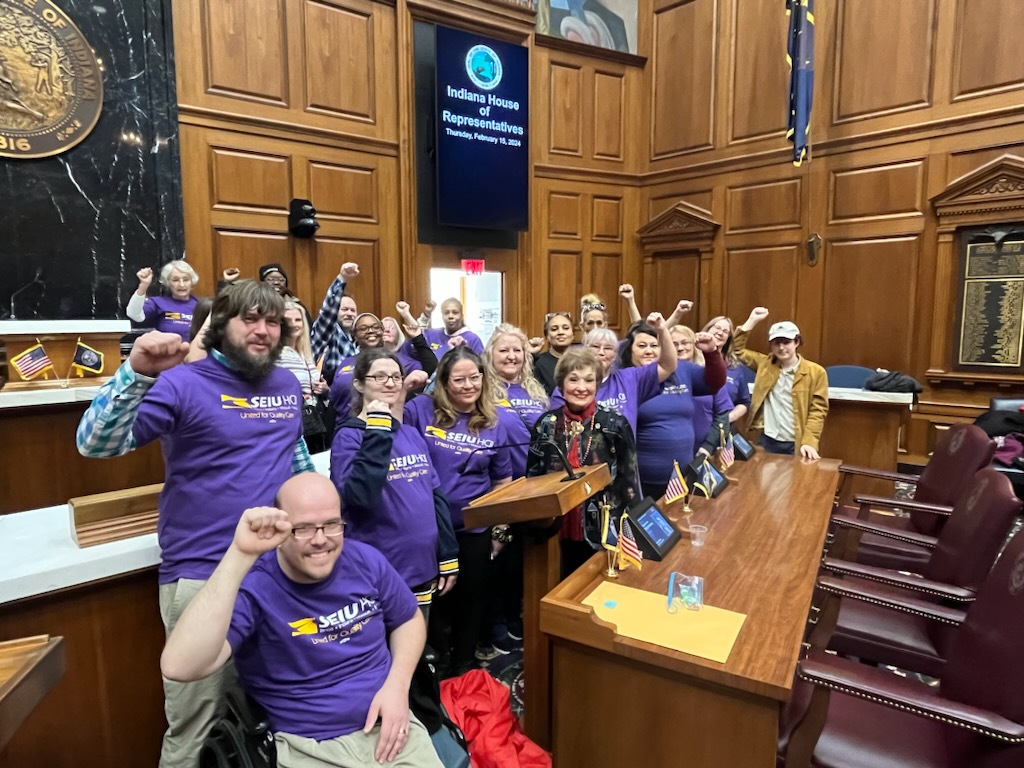
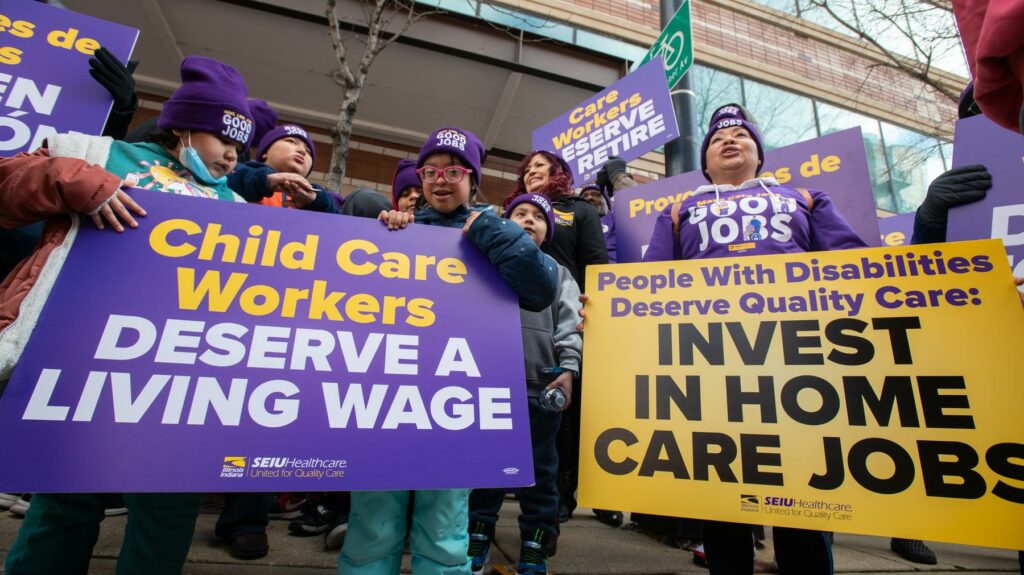
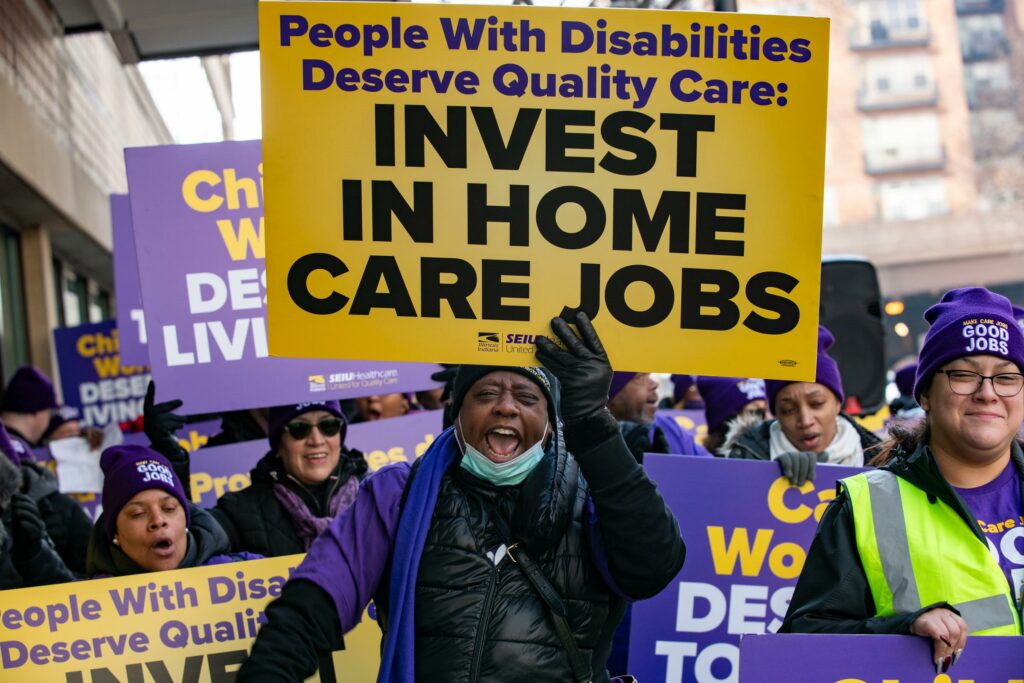
More than 35,000 home care workers are united in SEIU Healthcare Illinois & Indiana. Every day, we provide essential care that helps keep tens of thousands of seniors and people with disabilities healthy and in their homes and communities.
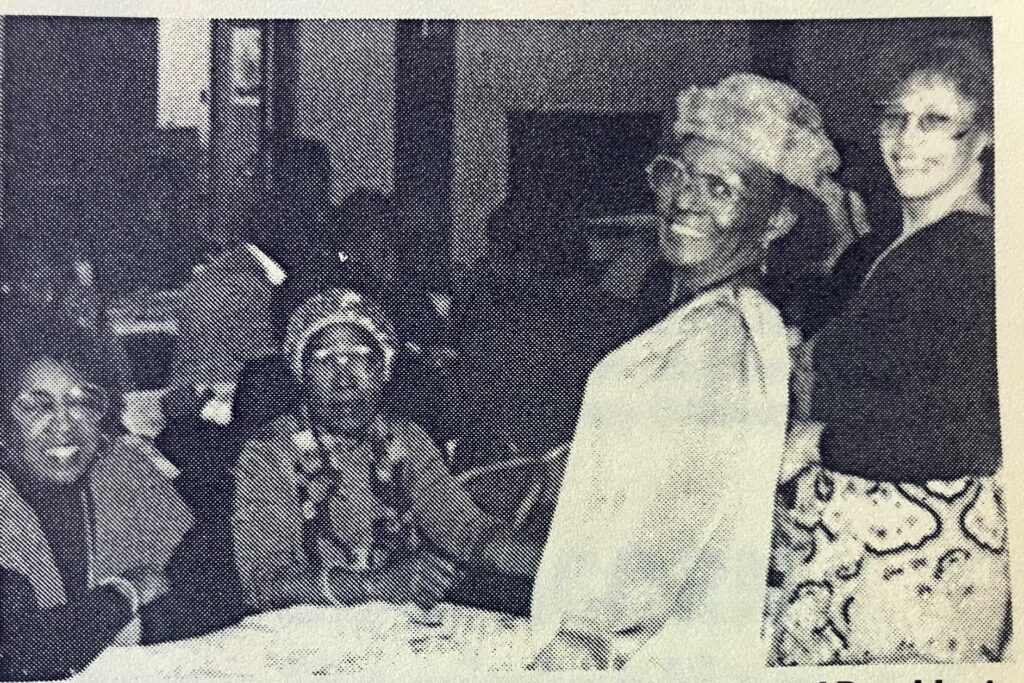
SEIU Healthcare members work as Personal Assistants in the Illinois Department of Human Services/Office of Rehabilitation Services, and as home care aides at agencies across Illinois, Indiana and Missouri. Since 1983—when home care was a minimum-wage job, with no benefits–home care workers have fought for and won living wages and healthcare for home care workers, protected quality home care for seniors and people with disabilities from state budget cuts, and to expand home care to more consumers.
Every day, more home health aides in Indiana, Illinois and Missouri are joining the growing movement of caregivers for quality home care for all consumers, and living wages, healthcare and respect for the home care workforce.

Members unite in Springfield to fight for program funding and fair wages for all workers

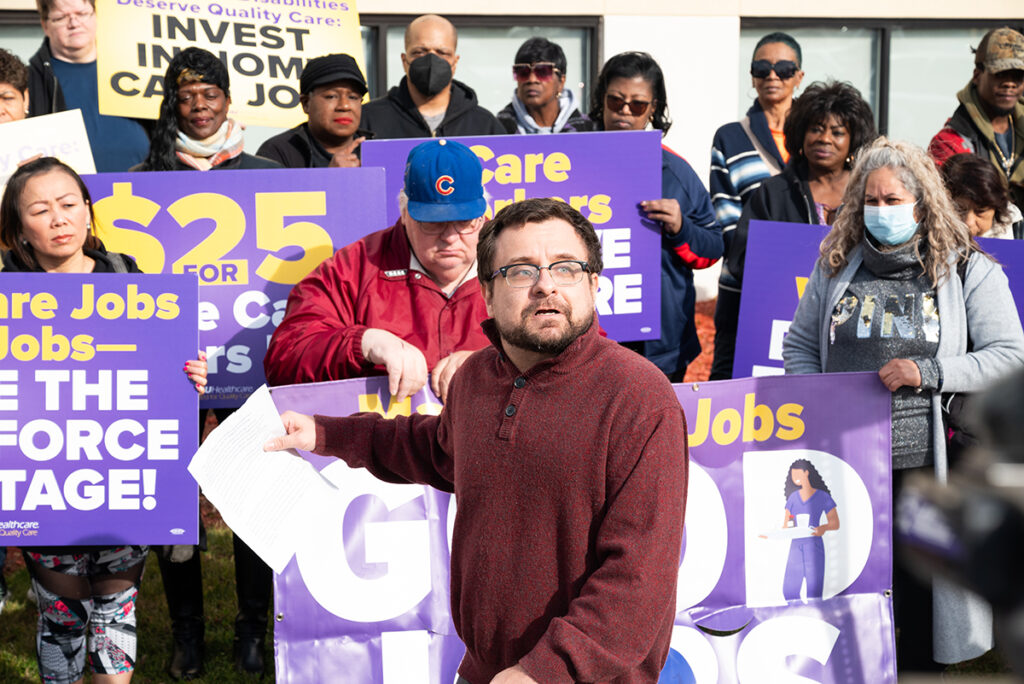
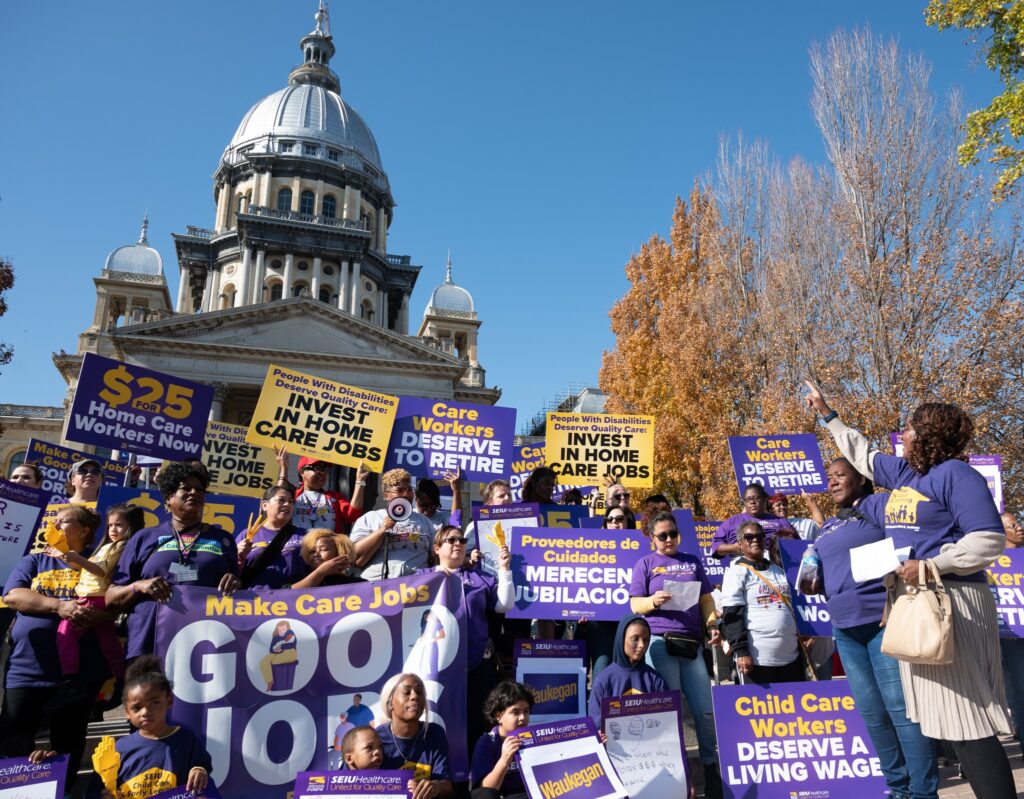
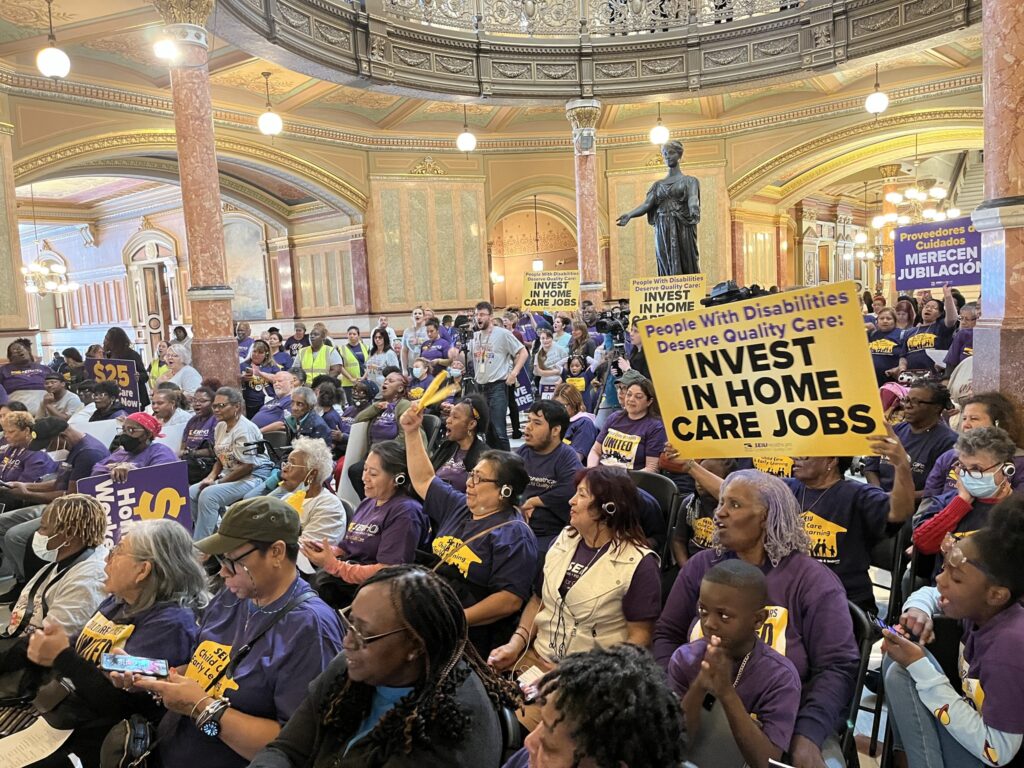
On May 16th, nearly 1000 members of SEIU HCII united in Springfield to fight for vital program funding, support for working families, and fair wages and conditions for workers in our union and beyond it.

Members kicked off the day in Springfield by swarming the Illinois Chamber of Commerce to protest their opposition to closing corporate tax loopholes and raising the minimum wage. The hundreds rallying and chanting on the street actually drew out the President of the Illinois Chamber, Doug Whitley. Mr. Whitley got more than he bargained for when Personal Assistant Lanette Newman from the South Side of Chicago, armed with a megaphone, told him why his organization’s stances on these two issues are hurting seniors, people with disabilities, kids, and working families.

Watch the video below to see Ms. Newman break it down and leave Mr. Whitley speechless:

Back at the Capitol, we delivered thousands of letters from working parents to Governor Pat Quinn bundled in children’s book covers expressing how important it is that we protect the Child Care Assistance Program. The Governor came out of his office to meet with our members and shake hands with the kids as they presented their ‘books’ of letters from working parents: Amelia Bedelia Saves Child Care, Clifford the Big Red Dog Goes to Springfield to Fight for Child Care, What the Ladybug Heard – Working Parents Need Quality Child Care, Oh, the Place You’ll Go…with Quality Child Care, and Alice’s Adventures in Springfield.

Child care members with Governor Pat Quinn

Child care members with Governor Pat Quinn

At the Rotunda, Roseland Hospital worker Gerald Grant talked about the vital service his hospital provides to its community, calling on lawmakers to provide the funding Roseland needs to keep its doors open.

“Just three months ago I pulled a 16 year old out of a car that had been shot in the head, a 16 year old girl, just driving her car. Someone shot her through the window. If you close Roseland, what’s going to happen to those people? There are four high schools surrounding Roseland, and a mentally ill institution that’s closed. We’ve inherited the mentally ill who have nowhere else to get their prescriptions. And they want to shut us down. Help us, you all, because this is not right.”

George White, who has served in several positions at the Winston Manor Nursing  Home, summed up our effort in the Capital best:

“I’m not going to stop until every member is making a decent wage, with top-flight health care, not just for nursing home workers, but for every single person in the state of Illinois! And as I look out among us, I see truly that we stand when we’re together.”

We brought nearly 1000 members from all over Illinois to make our voices heard in Springfield.

We brought nearly 1000 members from all over Illinois to make our voices heard in Springfield.

Did you like this? Share it:
Leave a comment

Caring Across Generations Holds Chicago Rally with Congresswoman Jan Schakowsky to Support Long-Term Affordable Care

Caring_Across_Generations_Rally_with_Cong_Jan_Schakowsky_05_13_13MAY 13, 2013

Demand for Long-Term Care Is Expected to Grow Dramatically to 27 Million Seniors By 2050

Congresswoman Jan Schakowsky and the Caring Across Generations coalition held a rally in downtown Chicago to highlight the need for long-term home care services and support for seniors and individuals with disabilities.

Congresswoman Schakowsky recently introduced a House Resolution to express support for expanded home health care services for millions of seniors and individuals with disabilities. Currently 12,000,000 adults, nearly half of whom are 65 or older, are in need of long-term services and supports due to functional limitations. This number is projected to grow to 27,000,000 by 2050.

Caring Across Generations presented Congresswoman Schakowsky with a Mother’s Day card thanking her for her support of working mothers every day. Mothers are often the primary caregivers for their children and other family members, and one day, all of our mothers will need care themselves. Many direct care workers are themselves mothers, often struggling to support their own families.

Advocates, caregivers and care consumers also tried to deliver a card calling on Senator Mark Kirk to honor mothers by highlighting the importance of making quality care available to everyone and supporting current resolutions in congress.

###

Caring Across Generations is a campaign that unites people to change the long-term care system that supports each of us, our family members and our neighbors, to live and age in our own homes and communities. www.caringacross.org

The Chicago Care Council is a local coalition of Caring Across Generations that includes care worker organizations, care consumer groups, and other advocacy and policy groups. Council members include: Access Living, ARISE Chicago, Chicago Jobs with Justice, Chicago Coalition of Household Workers, Chicago Coalition of Labor Union Women, Gray Panthers, Health and Medicine Policy Research Group, Heartland Alliance on Human Rights, Illinois Alliance of Retired Americans, Jane Addams Senior Caucus, Latino Union, National Jobs with Justice, National Domestic Workers Alliance, Sargent Shriver National, Center on Poverty Law, SEIU Health Care Illinois-Indiana, Women Employed, University of Illinois at Chicago, School of Public Health

Did you like this? Share it:
Leave a comment

HCII Members Join Allies in DC to Push for Resolutions to Strengthen Home Care

cag in dc

Home care providers and SEIU HCII members Gilda Brown and Annette Jones traveled to Washington, D.C. this week to join allies in pushing for reforms aimed at strengthening home care. The trip was organized by Caring Across Generations, a coalition of over 200 organizations that stand united for job creation, job quality, training and career ladders, a road map to citizenship, and support for care consumers and their families.

Jones and Brown participated in over 40 legislative visits and introduced Senate and House resolutions calling for a comprehensive approach to expanding and supporting a strong home care workforce. They shared personal stories with Senators Dick Durbin and Mark Kirk from Illinois, and Gilda Brown brought tears to lawmaker’s eyes during a panelist briefing with Representative Jan Schakowsky as she explained the struggles home care providers and consumers face every day.

With our aging US population, it’s estimated that by 2014 there will be a need for one million home care providers across our country. We applaud Gilda Brown and Annette Jones for helping to lead the fight to ensure seniors, people with disabilities, and their families have access to the quality home care they need, and that providers have quality jobs to meet their needs as well.

Did you like this? Share it:
Leave a comment

As Home Care Funding Crisis Continues, Seniors Join Faith Leaders to Call On Lawmakers to Pass Emergency Funding

(April 11, 2013, Springfield, IL) — Seniors, faith leaders, ministers, and community advocates staged a major rally and prayer circle on the 3rd floor of the State Capitol to call on state lawmakers to pass emergency funding to save Illinois’ home care assistance program. Seniors then lobbied state representatives and senators about the need to take immediate action to avoid the collapse of the Community Care Program (CCP).

The rally and lobby day received extraordinary TV and online press coverage.

Watch Springfield WCIA CBS 3:

Watch Springfield WICS ABC CH 20:

In addition, Illinois Issues blog reported on the senior lobby day:

Helping senior citizens remain in their homes is preferable for the state from a financial standpoint, since the Department of Aging estimates the costs would be as much as four times higher to pay for an individual placed in round-the-clock care in a nursing home.

The Department of Aging estimates 96 percent of the money it receives from the General Revenue Fund goes to the program. The department says the program was underfunded last fiscal year, as well. Part of the reason why the program is facing a shortfall is because it had to use some of the money it received this year to cover last year’s costs.

Jacquie Algee, executive director of relations for Service Employees International Union health care, said smaller providers that primarily rely on the state for their operations are most at-risk if the additional funding is not found. “It’s been a problem because it happens every year,” she said. The Illinois Association of Community Care Program Homecare Providers estimates that one-third of its members depend heavily on funding from the Department of Aging and would not be able to continue operations for more than 30 days without it.

On March 15th, the Department on Aging released a letter to notify all home care agencies and providers that the Community Care Program completely ran out of money. The state program funds home care for 80,000 seniors and allows them to live in their own homes instead of being forced into costly nursing home facilities. In addition to protecting the dignity, privacy and security of seniors, home care assistance also saves the state hundreds of millions by avoiding costly institutional care.

The Community Care Program through the Department on Aging serves seniors and faces a total shortfall of $313 million; $173 million in previous liability from FY12, and $140 million operating deficit in FY13.

Did you like this? Share it:
Leave a comment

On Tax Day, Seniors and Home Care Workers Protest Sears for Abusing Corporate Tax Loopholes

Seniors Ask: “Where is Our Lifetime Warranty to Living Independently?”

HCII Tax Day Protest at Sears 04_15_13(April 15, 2013, Chicago) — Seniors, community advocates and home care workers held a Tax Day protest outside a Sears store in downtown Chicago to call on the corporation to pay its fair share in taxes.  Seniors said it was important for large corporations to stop using — and abusing — tax loopholes and instead should be paying their fair share in taxes to fund vital home care services that keep seniors living independently.

Seniors and community allies delivered a tax bill to the store’s business office and asked for their own “lifetime warranty to living in their own homes.”

On March 15th, the Department on Aging released a letter to notify all home care agencies and providers that the Community Care Program (CCP) completely ran out of money. The state program funds home care for 85,000 seniors and allows them to live in their own homes instead of being forced into costly nursing home facilities. In addition to protecting the dignity, privacy and security of seniors, home care assistance also saves the state hundreds of millions by avoiding costly institutional care.

The Illinois Association of Community Care Program Homecare Providers (IACCPHP) says that without emergency funding the state’s home care system could collapse. The Association says that more than a third of its members have only 30 days to survive if the state’s funding is not restored immediately. Sears_taxday (8 of 11) (2)

Seniors, community advocates and home care workers are pushing state lawmakers to pass emergency funding to save the home care program immediately. The Community Care Program faces a total shortfall of $313 million; $173 million in previous liability from FY12, and $140 million operating deficit in FY13.


Did you like this? Share it:
Leave a comment

UPDATE: Illinois State Senate Passes Emergency Funding Bill to Save Home Care Program that Serves Seniors!

Thousands of members came to Springfield to make our voices heard and speak out against budget cuts.

Thousands of members came to Springfield to make our voices heard and speak out against budget cuts.

Victory!  Emergency Funding Bill for Community Care Program Now Moves to Gov. Quinn for Signature

CONTACT: Scott Vogel, scott.vogel@seiuhcil.org

(April 25, 2013, Springfield, IL) – After several months of intense grassroots activism and lobbying, letter writing and phone calls by seniors, home care workers, and community allies, the Illinois State Senate passed emergency funding today to save the Community Care Program (CCP) in the Department of Aging (DOA). The House of Representatives first passed its supplemental funding bill on April 19th. The home care funding bill now moves to Governor Quinn’s desk who is expected to promptly sign it.

The Community Care Program provides home care assistance to over 85,000 Illinois seniors and allows them to live independently in their own homes without being placed into nursing home facilities. The Community Care Program also employs 30,000 low-wage home care workers.

On March 8, the Department of Aging sent a letter to home care service providers that the DOA would completely run out of money by March 15, 2013 and therefore, unable to process payments for services in the CCP program. The news prompted seniors and home care workers to immediately mobilize and organize to save the CCP home care program from financial collapse. The grassroots groundswell culminated in today’s announcement.

In response, SEIU Healthcare Illinois President Keith Kelleher released the following statement:

“We thank the Illinois State Senate for promptly taking up the House’s emergency funding bill and passing it without delay to save the Community Care Program.

“Home care assistance for seniors is critically important – it is the difference between seniors being forced into nursing homes facilities and living independently with a sense of privacy, decency, and dignity.

“Today’s vote mattered greatly not only for the seniors who currently receive home care assistance but for future recipients who will one day rely on this critical program.

“We are so proud of the seniors and home care workers who quickly mobilized to protect their love ones, neighbors, friends, coworkers, and caregivers. It was a sight to behold watching so many people travel to Springfield to lobby their state lawmakers, organize rallies and events all over the state, and to call their elected officials to take immediate action.

“This is how our union defines ‘community’ – people who come together, in unity, to protect and look after each other. And that’s exactly what this fight was about – protecting our seniors.

“Illinois will continue to face burgeoning budget pressures as more and more seniors and baby-boomers retire and the demand for health and home care services only grows. That’s why it is critically important that state lawmakers fully fund home care assistance to keep seniors living in their own homes, which will save the state millions of dollars annually and up to three to four times the cost of nursing home care.

“Today we applaud our state lawmakers for doing what’s right by giving Illinois’ seniors peace of mind by protecting and funding the Community Care Program.”

-END-

Home Care Workers and Seniors Mobilized to Save Illinois’ “Community Care Program” in the Department of Aging

Home_care_rally_CCP_emergency_funding_passes_House_04_18_13FOR IMMEDIATE RELEASE
April 19, 2013

CONTACT:
Scott Vogel, scott.vogel@seiuhcil.org
Mike Truppa, mike.truppa@seiuhcil.org

(SPRINGFIELD, IL) – After several months of intense grassroots activism, lobbying, letter writing and phone calls by seniors, home care workers, and community allies, the Illinois House of Representatives finally passed a $173 million emergency funding bill today to save the Community Care Program (CCP) in the Department of Aging. The House passed the emergency funding bill by a staggering 115-2 vote.

SEIU Healthcare Illinois especially acknowledged the tremendous leadership from State Representatives Sara Feigenholtz (12th-District), Greg Harris (13th-District), and Patricia Bellock (47th-District).

The emergency funding bill, HB207, now moves to the state senate where advocates are calling for its immediate passage.

In response, SEIU Healthcare Illinois President Keith Kelleher released the following statement:

“We applaud the Illinois House of Representatives for passing emergency funding today to save our Community Care Program which serves seniors.

“Our state representatives recognized the importance of home care assistance that our workers provide to 85,000 seniors in Illinois every single day.

“Today’s vote is a tribute to the thousands of seniors, home care workers and community allies who quickly mobilized to save the Community Care Program before it financially collapsed.

“The passage of this emergency funding bill is a testament to our community’s ability to pull together to fight for what’s right and to channel our energy to protect vital services for those who most need them.

“Seniors and families decided they would not allow our vital home care program to be slashed simply because of the state’s broken budget system, nor due to political gridlock in Springfield.

“We stood together and we won. We call on state lawmakers to take notice and work to strengthen and fully fund Illinois’ home care programs to support and empower our state’s seniors, adults with disabilities and low-wage workers.”

Homecare_post_CCP_Emergency_fundng_passes_house_04_18_13Background
The Community Care Program provides home care assistance to over 85,000 Illinois seniors and allows them to live independently in their own homes without being placed into nursing home facilities. The Community Care Program also employs 30,000 low-wage home care workers.

On March 8, the Department of Aging sent a letter to home care service providers that the DOA would completely run out of money by March 15, 2013 and therefore, unable to process payments for services in the CCP program. The news prompted seniors and home care workers to immediately mobilize and organize to save the CCP home care program from financial collapse.

The $173 million cost of the emergency supplement equals approximately 0.5 percent of the state’s total budget. The Community Care Program is one of the best investments Illinois can make in the lives of seniors. The CCP program saves the state millions of dollars every year by dramatically reducing nursing home costs and gives seniors the ability to live independently with dignity, respect and privacy.

-END-

Did you like this? Share it:
Leave a comment

Indiana home care workers testify for Medicaid expansion, CHOICE funding

Indiana home care workers leapt into action last month, testifying for Medicaid expansion at the Statehouse and meeting with Muncie lawmakers to earn their support for Community and Home Options to Institutional Care for the Elderly and Disabled [CHOICE] expansion.

Help at Home worker Julie Martin of Michigan City traveled to Indianapolis to let her representatives know how much Medicaid expansion means to Hoosiers. Read her testimony:

Good afternoon…

My name is Julie Martin and I’m from Michigan City, Indiana. I’ve worked for Help at Home (a home care agency) in Michigan City for one year and also work for another home care agency called Global Home Health for 5 years.  I have been a health care worker for total 10 years. I’m a proud member of the largest health care union in this country – Service Employees International Union (SEIU). I’m proud to be apart of SEIU Health Care Indiana/ Illinois/ Missouri/ Kansas Local with the power of over 96,000 health care workers.  I’m here on behalf of all home care workers across the state that could not be here today to testify for Medicaid expansion for Hoosiers.

Julie Martin testifies on expanding Medicaid

Julie Martin testifies on expanding Medicaid

As a home care worker, I take care of many disabled kids and adults to make sure that they get the care they need in a familiar environment away from an institutionalized care. I make ($12.25) at Global Home Health agency and I make ($10.50) at Help at Home agency as a direct support provider. A meter reader in this state makes more than me. Although home care is a low paying and undervalued job, I love my job as a health care worker and giving care to those in need. The problem is that although I take care of others’ health, I can’t even take care of my own healthcare needs. I can’t afford to have health insurance and I have to choose between buying the food for my kids and paying medical bills. I work two jobs and it is still not enough. Does it make sense to you that home care workers can’t even afford health insurance? Currently, HIP (Healthy Indiana Plan) covers about 40,000 Hoosiers and there are 800,000 uninsured Hoosiers like me still out there without insurance. Expanding Medicaid would let over 400,000 Hoosiers access insurance that covers the services we need without forcing us to decide between paying for health care and paying other bills. HIP, on the other hand, does not cover crucial services like dental and vision care and includes co-payments that will discourage low income people just like me who live paycheck to paycheck from getting necessary care.

HIP was created with a good intention – to fill the gap in insurance coverage with the resources we have. We appreciate that. But it is not enough and leaves hundreds thousands of Hoosiers without access to any health insurance, and the program has serious limitations even for those who can enroll. Now we have a great opportunity to expand Medicaid. I respectfully urge the Governor to have a heart for uninsured Hoosiers like me and expand Medicaid so that and we can take care of those in need. It’s time to consider what’s best for Indiana and expand Medicaid to the 400,000 Hoosiers who we’ve left behind for too long.

Sincerely,

Julie Martin


Later in March, workers and consumers from Help At Home Muncie met with State Representatives Tom Saunders and Sue Errington to fight for full funding for the CHOICE program that helps to provide care for Indiana residents who are not eligible for Medicaid. Though funding shortages continue to threaten this important program in our area, after meeting with our members and consumers, Errington and Saunders were successful in getting the funding partially restored.

Meeting with Muncie legislators on CHOICE funding

Meeting with Muncie legislators on CHOICE funding

“Our meeting was warm and informal, and resulted in positive support from Representatives Saunders and Errington,” said Muncie Help at Home member Lesa Langdon. “It always feels good to bring our concerns directly to our legislators and have them addressed.”

We’re still fighting for full CHOICE funding all over Indiana, but this success is a great reminder of how important it is for SEIU members to share our personal stories with lawmakers in order to win for our consumers and our communities.

Did you like this? Share it:
Leave a comment

Press Release: SEIU Launches Ad Campaign On Home Care Crisis Jeopardizing 80,000 Illinois Seniors

Ad Blitz Urges Lawmakers to Pass Supplemental Funding for Embattled Community Care Program Homecare_SJR_ad_CCP_funding_crisis_04_10_13

FOR IMMEDIATE RELEASE:
April 10, 2013

CONTACT: Mike Truppa, SEIU Healthcare Illinois, mike.truppa@seiuhcil.org

SPRINGFIELD, IL – After nearly a month of political stalemate on efforts to resolve a financial crisis threatening home care services for more than 80,000 Illinois seniors, the union representing home care workers launched a comprehensive paid media and field campaign on Wednesday urging lawmakers to pass supplemental funding to save the program.
SEIU Healthcare Illinois and Indiana, which represents 30,000 home care workers who participate in the financially distressed Community Care Program, initiated a multi-tiered campaign to alert the public to the funding woes that have already caused service cutbacks in some markets around the state.

Watch the ad here.

The campaign will include:

• Broadcast TV, print and on-line ads
• Multiple rounds of direct mail to seniors and the union members across the state
• Call programs to patch seniors and union members through to their lawmaker

“The fate of 80,000 seniors and 30,000 home care providers is hanging in the balance while home care funding is held hostage to partisan gridlock,” said SEIU Healthcare Illinois and Indiana President Keith Kelleher. “This is a program that not only allows seniors to continue to live independently, but also saves the state money it would otherwise have to spend on long-term institutional care. Morally, politically and financially, we can’t afford to short-change our seniors.”

Legislators allowed CCP to run out of money on March 15th – leaving its coffers barren through the remainder of the fiscal year – despite warnings of potentially catastrophic repercussions from the association representing agencies that provide home care.

In a letter sent to lawmakers in early March, the Illinois Association of Community Care Program Homecare Providers (IACCPHP) urged them to pass a $173 million supplemental appropriation for CCP and “avoid a collapse of the homecare agency infrastructure.”

Without that infusion, the Association predicted that 37 percent of its members would not survive the fiscal outage.

The union has established an on-line hub for the public to take action to urge lawmakers to address the escalating crisis: www.saveseniors.com
-END-

Did you like this? Share it:
Leave a comment

As Illinois’ Home Care Funding Crisis Continues, State Representative Mike Bost Serves as Home Care Worker for Seniors

WAD_Homecare_Rep_Bost_(March 26, 2013, Carbondale, IL) – State Representative Mike Bost (R-115th District) chose to spend his morning today cleaning the house for a married couple who are also his constituents: Chauncey, 70-years-old and Christina Wilson who is 69. Mr. Bost wanted to experience firsthand the value of the state’s Community Care Program at the Department of Aging which allows 80,000 seniors in Illinois to live in their own homes instead of being forced into expensive nursing home facilities.

But right now Illinois’ home care program is in dire crisis. The Community Care Program is literally out of money despite urgent calls to state lawmakers from seniors, home care providers, and community allies to pass emergency funding to save the program. The Community Care Program faces a total shortfall of $313 million; $173 million in previous liability from FY12, and $140 million operating deficit in FY13.

It was under this backdrop that Rep. Bost shadowed Ms. Josie Ball, a home care worker with ADDUS for five and a half years.  Josie has served as the Wilsons’ home care assistant the last two years.

Watch the Carbondale ABC News WSIL report:


“Without my personal care and attention, there is no doubt the Wilsons would have to be placed in a nursing home which is exactly where they don’t want to be. If the state slashes or eliminates the Community Care Program, they simply would not be safe,” said Ms. Ball. “I feed them. I remind them to take their medication. I do all the little things that allow them to live at home.”

Both Chauncey and Christina Wilson suffer from a variety of health issues.  They both have diabetes.  Chauncey suffers from heart complications and extreme fatigue. Christina is still recovering from brain surgery and chemotherapy two years ago.  She still suffers from depression from her surgery and can’t do the basic tasks she used to love to do such as cooking, shopping, and keeping her home clean to invite guests over.

“I was someone who always worked, and never depended on anybody. It was how I lived my life. But now, after my surgery, I just can’t do the things I used to anymore,” said Christina Wilson.  “It’s painful, but at least I can live in my own home.”  Ms. Wilson is frustrated about her memory loss, and often loses her place both in conversation and when she is in public.  Ms. Wilson is quick to acknowledge the emotional support she receives from Josie.

On March 15th, the Department on Aging notified all home care agencies and providers that the Community Care Program completely ran out of money.  In addition to protecting the dignity, privacy and security of seniors, home care assistance also saves the state hundreds of millions by avoiding costly institutional care.  The Illinois Association of Community Care Program Homecare Providers (IACCPHP) says that without emergency funding the state’s home care system could collapse. The Association says that more than a third of its members have only 30 days to survive if the state’s funding is not restored immediately.

“It’s not right that our seniors should be put in this awful predicament worrying about whether their home care assistance will be cut, or whether they’ll be forced into a nursing home,” said Josie Ball. “We need state lawmakers to commit to fully funding home care services immediately to protect our seniors.”

Did you like this? Share it:
Leave a comment

Seniors ‘Sound the Alarm’ to State Lawmakers to Demand Emergency Funding for Home Care Services

DSC_0023Community Care Program in the Department of Aging Is Completely Out of Money as Political Stalemate Drags On

Our allies at the Jane Addams Senior Caucus held an incredible rally in downtown Chicago at the State of Illinois Building to call on state lawmakers to pass emergency funding to save our home care program that serves seniors.

Watch and share this video from the rally.

Seniors and community advocates blared alarm clocks outside the Thompson Center at the State of Illinois Building to literally ‘sound the alarm’ to state lawmakers that home care assistance for seniors is in crisis and needs emergency supplemental funding.  Seniors and community allies also delivered letters to the offices of Governor Pat Quinn, House Speaker Mike Madigan, and Senate President John Cullerton demanding that state lawmakers act to protect seniors.

Emily Byrd, Chairperson of the Jane Adams Senior Caucus said in her letter to legislative leaders that: “If providing agencies are forced to cut back or stop services, it will have drastic impact on the lives of our most vulnerable citizens. It will also result in the unemployment of underemployment for the 25,000 workers who care for them. This is a situation the state cannot afford.” She added, “The personal cost of having to give up independence cannot be measured.”

On March 15th, the Community Care Program in the Department of Aging, completely ran out of money.  The state program funds home care for 80,000 seniors and allows them to live in their own homes instead of being forced into costly nursing home facilities.  In addition to protecting the dignity, privacy and security of seniors, home care assistance also saves the state hundreds of millions by avoiding costly institutional care.

The Illinois Association of Community Care Program Homecare Providers (IACCPHP) says that without emergency funding the state’s home care system could collapse. The Association says that more than a third of its members have only 30 days to survive if the state’s funding is not restored immediately.

The Community Care Program through the Department on Aging serves seniors and faces a total shortfall of $313 million; $173 million in previous liability from FY12, and $140 million operating deficit in FY13.

Did you like this? Share it:
Leave a comment